AI is no longer an experiment. It now embedded in: finance, healthcare, hiring, security, media, government, and critical infrastructure.
Which means something important has changed: AI is not just technology anymore. It is power.
And history is very consistent about one thing: Power without governance eventually gets abused.
The real risk isn’t intelligence. It’s scale.
People worry that AI is “too smart.” That’s not the real problem.
The real problem is that AI allows very small groups — even individuals — to operate at massive scale.
Today, one person can:
- impersonate thousands
- generate millions of messages
- create fake identities
- manipulate markets
- spread coordinated misinformation
- automate scams
AI didn’t create crime. It removed the friction that used to limit it.
Every new infrastructure creates abuse before stability
We’ve seen this before. When we introduced:
- banking → fraud
- telephones → scams
- the internet → cybercrime
- social media → misinformation
Each time, society followed the same pattern: innovation first, abuse second, regulation later.
AI is not different. Except the speed and scale are unprecedented.
Right now, we are launching a global cognitive infrastructure go live without a legal system designed for it.
Why “Just be careful” will never work
Personal responsibility is not enough when systems operate at industrial scale.
We cannot rely on personal responsibility alone. No individual can realistically defend themselves against deepfakes, synthetic identities, AI-generated manipulation, or automated phishing.
We don’t ask passengers to inspect airplanes before boarding. Infrastructure requires rules, licensing, auditing, and enforcement.
Not to slow down, but to make it safe to use.
What responsible AI actually needs
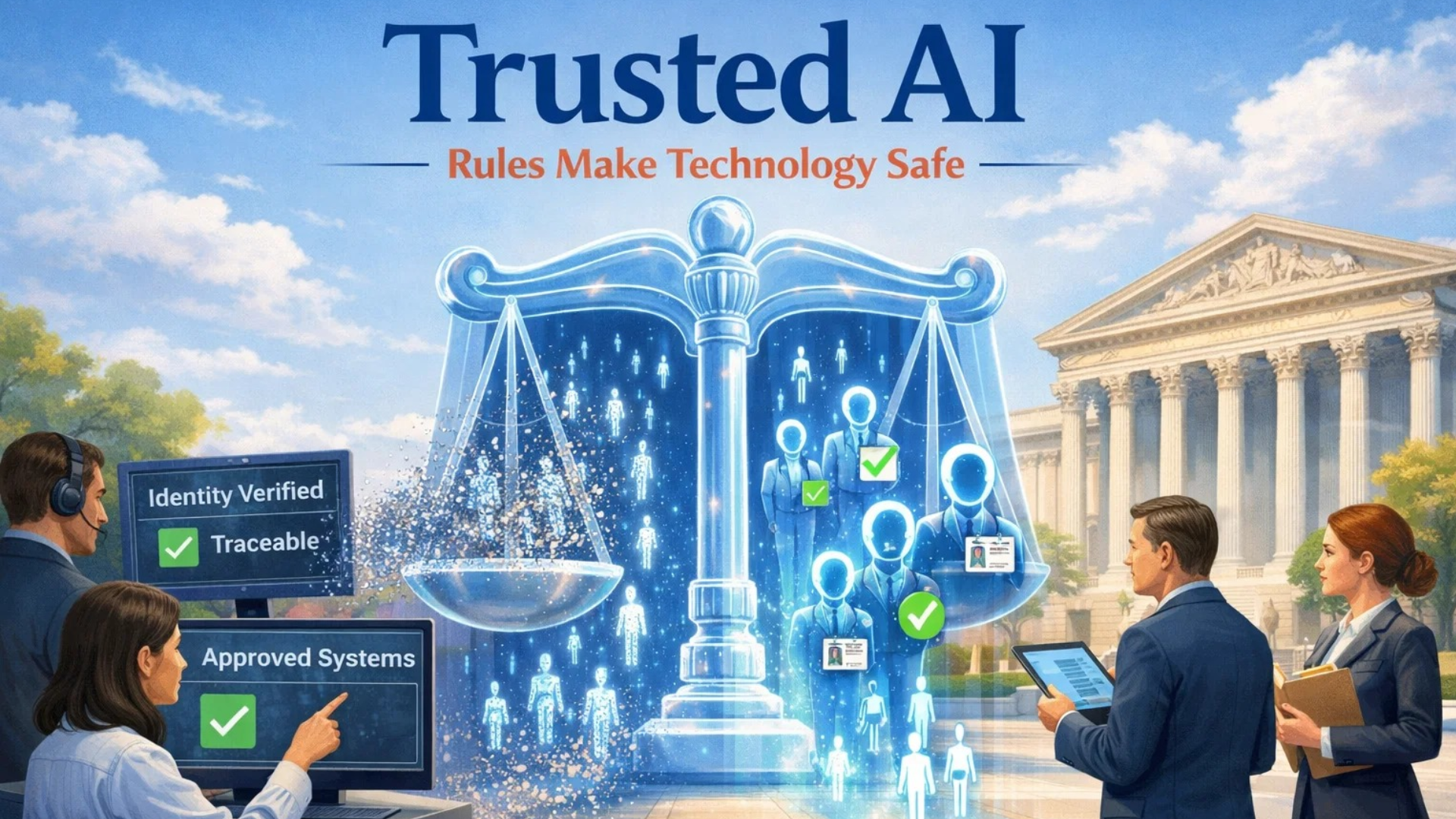
Smart regulation is not a ban on innovation. It’s what allows innovation to scale safely.
Practical steps look like:
- identity verification for AI agents
- traceability of generated content
- liability for misuse
- security standards for models and platforms
- cross-border enforcement
We already accept this for banks, pharmaceuticals, airlines, energy grids.
Because systems capable of harming millions cannot run on trust alone. They require law.
The real danger
The risk isn’t that AI becomes powerful. It already is.
The real risk is that it becomes unaccountable.
A world where no one knows what is real, no one is responsible, and criminals move faster than institutions is not the future we want.
The real choice
This isn’t a debate between innovation vs regulation or freedom vs control.
It’s a choice between: governed infrastructure or digital anarchy.
AI will shape markets, democracy, and human trust.
So the real question is no longer: Should AI be regulated?
It is: Who will?